
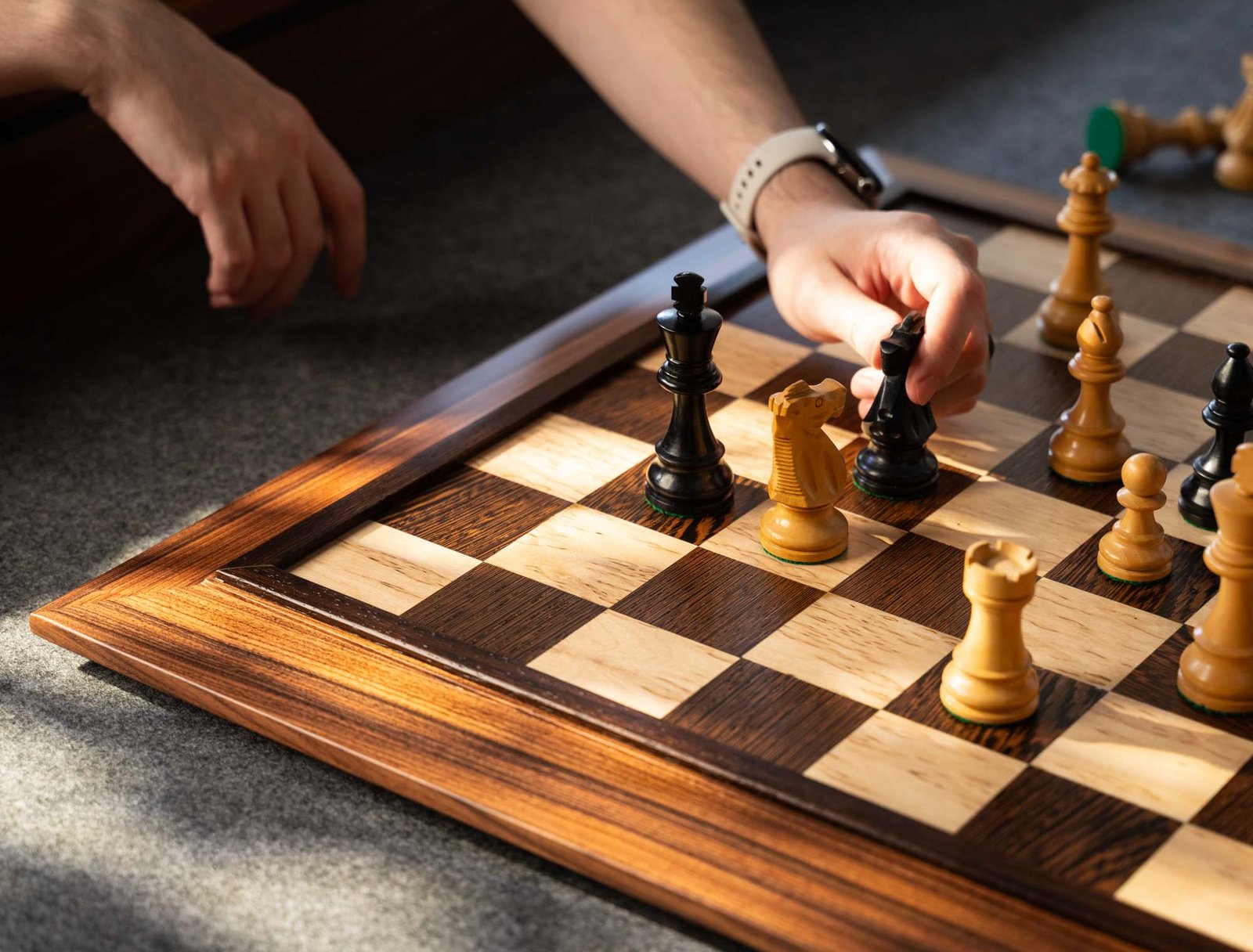
Chess is one of the most respected and intellectually demanding games in the world. While many people learn chess casually at home, online, or with friends, tournament chess follows a strict and standardized set of rules to ensure fairness, consistency, and professionalism. These official chess rules used in tournaments are governed mainly by FIDE, the International Chess Federation, and are followed in international, national, and most professional-level competitions. Understanding these rules is essential for players who wish to compete seriously, arbiters who manage events, coaches who train players, and even spectators who want to fully appreciate high-level chess games.
This comprehensive guide explains the official chess rules used in tournaments in simple yet detailed language. It covers everything from the basic objective of the game to advanced regulations about time control, touch-move rules, illegal moves, draw conditions, scoring systems, player conduct, arbiters’ responsibilities, and modern tournament practices. Whether you are a beginner stepping into your first tournament or an experienced player looking to refresh your knowledge, this guide will give you a complete understanding of tournament chess rules.
Governing Authority of Official Chess Rules
The official chess rules used in tournaments are primarily established by FIDE, the World Chess Federation. FIDE laws of chess apply to international tournaments, title events, and most national federation competitions. Many local and national tournaments also adopt these rules with minor adaptations. The purpose of FIDE rules is to ensure that chess games are played under the same standards worldwide, regardless of location.
Tournament rules are revised periodically to address changes in technology, playing conditions, and competitive fairness. Players are expected to be familiar with the latest version of the rules before participating in any official chess tournament. Ignorance of the rules is not considered a valid excuse in competitive play.
Objective of the Game in Tournament Chess
The objective of chess in tournaments remains the same as in casual play. Each player aims to checkmate the opponent’s king. Checkmate occurs when the king is under attack and there is no legal move to escape the threat. Once checkmate is delivered, the game ends immediately, and the player delivering checkmate is declared the winner.
If neither player can achieve checkmate, the game may end in a draw under specific conditions defined by official chess rules. Tournament games are always decisive in terms of result classification, meaning every game ends as a win, loss, or draw.
Chessboard and Equipment Rules
Official chess tournaments require a standard chessboard with 64 squares arranged in an eight-by-eight grid. The board must be placed so that each player has a white square on the right-hand corner. The squares should be of alternating light and dark colors, usually white and black or light and dark brown.
Chess pieces must be of a standard Staunton design, which is universally accepted in tournament play. The pieces should be clearly distinguishable by shape and color. One set of white pieces and one set of black pieces are used. The king must be identifiable and taller than the other pieces.
Chess clocks are mandatory in tournament games. Modern tournaments commonly use digital chess clocks, which allow precise time control and increment settings. The clocks must be placed so that both players can easily see them.
Initial Setup and Starting the Game
At the start of a tournament game, the pieces must be placed in their correct starting positions. Pawns are placed on the second rank for white and the seventh rank for black. Rooks occupy the corners, knights are placed next to rooks, bishops next to knights, the queen on her own color square, and the king on the remaining central square.
Before the game begins, players shake hands as a sign of sportsmanship. The player with the white pieces makes the first move. The arbiter starts the chess clock after announcing the start of the round or at the scheduled time.
Legal Moves of the Pieces
Each chess piece has specific legal moves that must be followed strictly in tournament play. The king moves one square in any direction but cannot move into check. The queen can move any number of squares along ranks, files, or diagonals. The rook moves horizontally or vertically, while the bishop moves diagonally. Knights move in an L-shaped pattern and can jump over other pieces. Pawns move forward one square, or two squares from their starting position, and capture diagonally.
Special moves such as castling, en passant, and pawn promotion are allowed under specific conditions defined by official chess rules. Castling involves moving the king and rook simultaneously, provided neither piece has moved before and the king does not pass through or end up in check. En passant allows a pawn to capture an opposing pawn under certain circumstances immediately after it moves two squares. Pawn promotion occurs when a pawn reaches the eighth rank and must be promoted to a queen, rook, bishop, or knight.
Touch-Move Rule
One of the most important official chess rules used in tournaments is the touch-move rule. If a player deliberately touches one of their own pieces, they must move that piece if a legal move is available. If a player touches an opponent’s piece, they must capture it if legally possible.
The purpose of the touch-move rule is to prevent players from gaining an unfair advantage by testing reactions or misleading opponents. Players may adjust pieces on their squares only if they announce their intention by saying “adjust” or a similar phrase before touching the piece.
Check, Checkmate, and Illegal Positions
A player is said to be in check when their king is attacked by an opponent’s piece. It is illegal to make a move that leaves or places your own king in check. If a player cannot remove the check by any legal move, the position is checkmate, and the game ends immediately.
Illegal positions, such as having both kings in check or missing kings on the board, are not allowed in tournament play. If an illegal move is made, the arbiter must intervene according to the rules.
Handling Illegal Moves in Tournaments
Official chess rules have strict guidelines for dealing with illegal moves. An illegal move includes moving a piece in a way not allowed by the rules, failing to respond to a check, or promoting a pawn incorrectly.
In most tournaments, the first illegal move results in a warning and the position is restored to the last legal position. Time penalties may be added to the opponent’s clock. Repeated illegal moves can result in loss of the game, depending on the tournament regulations.
Time Controls and Chess Clocks
Time control is a crucial aspect of tournament chess. Each player is given a fixed amount of time to complete a certain number of moves or the entire game. Common time controls include classical, rapid, and blitz formats.
In classical chess, players may have 90 minutes or more for the game, often with additional increments per move. Rapid chess usually allows 10 to 25 minutes per player, while blitz chess provides three to five minutes per player.
Players must press their clock after completing a move with the same hand used to move the piece. Failing to manage time properly can result in losing the game if a player’s time runs out before completing the required moves.
Draw Rules in Tournament Chess
Official chess rules define several ways a game can end in a draw. These include stalemate, threefold repetition, the fifty-move rule, insufficient mating material, and mutual agreement between players.
Stalemate occurs when a player has no legal moves and is not in check. Threefold repetition allows a player to claim a draw if the same position occurs three times with the same player to move. The fifty-move rule applies if no pawn move or capture has occurred in the last fifty moves. Insufficient material means neither player has enough pieces to checkmate the opponent.
Claiming a Draw
In tournament play, a draw must be claimed correctly. Players must stop the clock and inform the arbiter if claiming a draw by rule. Simply stating a draw without following proper procedure may result in the claim being rejected.
Draw offers are allowed but must be made after making a move and before pressing the clock. Repeated or distracting draw offers can be considered unsportsmanlike conduct.
Scoring System in Chess Tournaments
The standard scoring system in official chess tournaments awards one point for a win, half a point for a draw, and zero points for a loss. Tournament standings are determined by total points scored.
Tie-break systems such as Buchholz, Sonneborn-Berger, or head-to-head results are used when players finish with equal points. These tie-breaks help determine rankings, prizes, and title norms.
Player Conduct and Fair Play Rules
Tournament chess places great importance on sportsmanship and fair play. Players must behave respectfully toward opponents, arbiters, and spectators. Any form of cheating, including using electronic devices or outside assistance, is strictly prohibited.
Mobile phones and smart devices are usually banned in the playing area. If a player’s phone makes a sound during a game, it may result in penalties or immediate loss, depending on the tournament rules.
Role of the Arbiter
The arbiter is the official authority in a chess tournament. Their responsibilities include enforcing rules, resolving disputes, managing time controls, and ensuring fair play. Players must follow the arbiter’s decisions during the game.
If a dispute arises, players should stop the clock and request the arbiter’s assistance. Arguing or disturbing other games is not allowed.
Recording Moves and Scoresheets
In most official chess tournaments, players are required to record their moves on a scoresheet. This record is important for verifying game results, resolving disputes, and analyzing games later.
Players may stop recording moves if they have less than five minutes remaining on their clock, depending on tournament regulations. After the game, both players sign the scoresheet to confirm the result.
Forfeits and Late Arrival Rules
Tournament rules specify how long a player can be late before forfeiting the game. In many modern tournaments, the default time is zero tolerance, meaning a player who arrives late loses the game. Other events may allow a grace period of 15 or 30 minutes.
Repeated lateness or failure to appear for games can lead to removal from the tournament.
Online and Hybrid Tournament Rules
With the rise of online chess, official rules have expanded to include online and hybrid tournaments. These events follow similar principles but include additional anti-cheating measures such as camera monitoring, screen sharing, and fair play detection systems.
Common Keywords Related to Official Chess Rules
Official chess rules, FIDE laws of chess, tournament chess rules, chess time control rules, touch move rule chess, illegal move in chess tournament, draw rules in chess, chess scoring system, chess arbiter rules, chess clock rules, chess tournament regulations, fair play in chess, chess equipment standards, online chess tournament rules.
Conclusion
The official chess rules used in tournaments form the foundation of competitive chess worldwide. They ensure that every game is played fairly, consistently, and professionally, regardless of the players or location. While these rules may seem complex at first, understanding them is essential for anyone who wants to compete seriously or follow tournament chess with confidence.
By learning and respecting official chess rules, players not only improve their performance but also contribute to the integrity and timeless tradition of the game. Chess remains a universal sport of strategy, discipline, and respect, and its official rules are what keep the game fair and meaningful at every level of competition.