
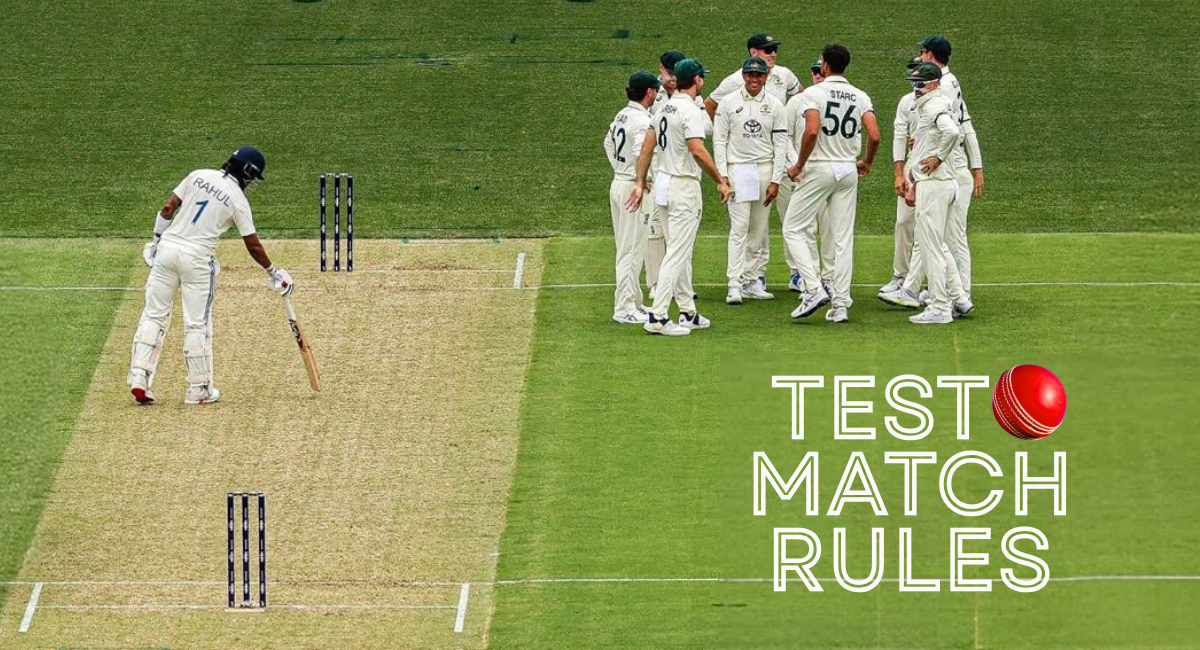
Cricket is one of the most popular sports in the world, especially in countries like India, England, Australia, Pakistan, and South Africa. While the basic idea of cricket is simple, the game has different formats, each with its own rules, duration, and playing style. Understanding cricket match rules explained clearly for Test cricket, One Day Internationals (ODI), and Twenty20 (T20) formats helps players, students, and fans enjoy the game more deeply.
Cricket is governed globally by the International Cricket Council (ICC), which sets standardized cricket rules and regulations for all international matches. These rules ensure fair play, consistency, and clarity across formats. Although the spirit of cricket remains the same, Test matches, ODIs, and T20 matches differ in overs, time limits, fielding restrictions, and strategic approach.
This detailed guide explains cricket match rules for Test, ODI, and T20 formats in simple language. It covers the basics of cricket, player roles, match structure, scoring system, bowling rules, fielding rules, dismissals, powerplays, and format-specific differences. This blog uses important cricket keywords naturally and does not use line separators, making it suitable for learning, teaching, and online indexing.
Basics of Cricket and Objective of the Game
The main objective of cricket is for one team to score more runs than the opposing team. A cricket match is played between two teams, each consisting of eleven players. One team bats to score runs, while the other team bowls and fields to restrict runs and take wickets. After one team completes its innings, the teams switch roles.
Runs are scored by hitting the ball and running between the wickets or by hitting boundaries. The batting team aims to score as many runs as possible, while the bowling team tries to dismiss batters and limit scoring. The team with the higher score at the end of the match wins, depending on the format and match conditions.
Cricket Ground, Pitch, and Equipment Rules
A cricket match is played on a large oval-shaped ground with a 22-yard-long pitch at the center. The pitch contains two sets of three stumps, known as wickets, placed at each end. Crease lines mark the batting and bowling areas and play an important role in run-outs and no-ball decisions.
The cricket ball is made of leather and is usually red in Test matches, white in ODIs and T20s played under lights, and pink in day-night Test matches. Bats are traditionally made of wood and must meet size and weight regulations set by the ICC. Players wear protective gear such as pads, gloves, helmets, and guards to ensure safety.
Player Roles in a Cricket Team
Each cricket team has specialist players with different roles. Batters focus on scoring runs, bowlers aim to take wickets and control runs, all-rounders contribute with both bat and ball, and the wicketkeeper stands behind the stumps to catch the ball and attempt dismissals.
The captain plays a crucial role in decision-making, such as setting the field, choosing bowlers, and deciding whether to bat or bowl first. Understanding player roles is essential for appreciating cricket rules and match strategies.
Toss and Start of a Cricket Match
Before the match begins, the two captains participate in a toss. The winning captain chooses whether to bat or bowl first. This decision depends on pitch conditions, weather, format, and team strategy.
The toss is an important part of cricket rules because conditions can change during the match, especially in longer formats like Test cricket.
Scoring Rules in Cricket
Runs are the basic scoring unit in cricket. Batters score runs by running between the wickets after hitting the ball. If the ball reaches the boundary after touching the ground, four runs are awarded. If the ball crosses the boundary without touching the ground, six runs are awarded.
Extra runs are awarded due to bowling or fielding mistakes, such as no-balls, wides, byes, and leg byes. These extras add to the team score but may not count toward the batter’s individual score, depending on the type.
Dismissals and Ways to Get Out
A batter can be dismissed in several ways. The most common methods include bowled, caught, leg before wicket, run out, stumped, and hit wicket. Each dismissal has specific rules defined by the ICC.
Bowled occurs when the ball hits the stumps and dislodges the bails. Caught happens when a fielder catches the ball before it touches the ground. Leg before wicket occurs when the ball strikes the batter’s leg in line with the stumps under certain conditions. Run out and stumped involve breaking the stumps while the batter is out of the crease.
Understanding dismissal rules is essential for players and fans to follow match decisions correctly.
Bowling Rules and Overs
An over consists of six legal deliveries bowled by one bowler. Bowlers must bowl with a straight arm, and illegal deliveries are called no-balls or wides. No-balls result in extra runs and an additional delivery.
Bowlers have limits on the number of overs they can bowl, depending on the format. These limits help maintain fairness and prevent overuse of a single bowler.
Fielding Rules and Restrictions
Fielders must follow specific placement rules, especially during limited-overs formats. Fielding restrictions are designed to balance the contest between bat and ball.
In Test cricket, fielding restrictions are minimal, allowing captains more freedom. In ODIs and T20s, powerplays restrict the number of fielders outside the inner circle for certain overs.
Test Cricket Rules Explained
Test cricket is the longest and most traditional format of the game. A Test match is played over a maximum of five days, with each team allowed two innings. There is no limit on the number of overs in Test cricket, making it a true test of skill, endurance, and strategy.
A standard Test match day consists of around 90 overs, divided into sessions with breaks for lunch and tea. The match can end in a win, loss, draw, or tie. Draws are common in Test cricket due to time constraints and weather interruptions.
Test cricket rules emphasize patience, technique, and tactical depth. Bowlers can bowl long spells, and batters aim to build innings over several hours or even days. Fielding rules are flexible, allowing creative strategies.
ODI Cricket Rules Explained
One Day International cricket is a limited-overs format where each team is allowed a maximum of 50 overs. The match is completed in a single day, making it more result-oriented than Test cricket.
In ODIs, bowlers are limited to a maximum of 10 overs per innings. Powerplay rules restrict field placements during different phases of the innings, encouraging attacking play.
ODI cricket rules also include regulations for rain-affected matches, such as the Duckworth-Lewis-Stern method, which adjusts target scores fairly. ODIs balance strategy and aggression, combining elements of Test cricket and T20 cricket.
T20 Cricket Rules Explained
Twenty20 cricket is the shortest and most fast-paced international format. Each team is allowed only 20 overs, and matches typically last about three hours. T20 cricket focuses on aggressive batting, quick bowling spells, and athletic fielding.
Bowlers can bowl a maximum of four overs in a T20 match. Powerplays are shorter, and fielding restrictions are stricter, promoting high-scoring games. T20 rules encourage innovation, with batters attempting unconventional shots and bowlers using variations to deceive opponents.
Due to its entertainment value and short duration, T20 cricket has become extremely popular worldwide.
Powerplay Rules Across Formats
Powerplays are specific periods during an innings when fielding restrictions apply. In ODIs, the first ten overs are mandatory powerplay overs, followed by additional powerplay phases. In T20 cricket, the first six overs are powerplay overs.
During powerplays, only a limited number of fielders are allowed outside the inner circle. These rules encourage aggressive batting and help maintain excitement in limited-overs cricket.
Umpires and Match Officials
Cricket matches are officiated by umpires and match officials who ensure that rules are followed correctly. On-field umpires make decisions regarding dismissals, no-balls, wides, and boundaries. Third umpires and match referees assist with video reviews and disciplinary matters.
Technology such as the Decision Review System is used in international cricket to reduce errors and improve decision accuracy.
Penalties and Fair Play Rules
Cricket emphasizes the spirit of the game and fair play. Penalty runs can be awarded for unfair actions such as ball tampering, time wasting, or dangerous play. Players are expected to respect umpires, opponents, and the rules of cricket.
Disciplinary codes govern player behavior, and repeated offenses can result in fines or suspensions.
Key Differences Between Test, ODI, and T20 Cricket
Test cricket focuses on endurance, technique, and long-term strategy, with unlimited overs and two innings per team. ODI cricket balances patience and aggression with a fixed 50-over limit. T20 cricket prioritizes speed, power, and entertainment with only 20 overs per side.
Understanding these differences helps fans appreciate why players adapt their playing style based on the format. Each format has its own charm and challenges.
Importance of Understanding Cricket Match Rules
Knowing cricket match rules explained clearly allows fans to follow matches accurately and enjoy the game more. For players, rule knowledge helps avoid penalties and improves decision-making. For students and beginners, learning cricket rules builds a strong foundation for understanding strategies and match situations.
Cricket rules bring structure, fairness, and excitement to the game, making it one of the most loved sports globally.
Conclusion
Cricket match rules explained for Test, ODI, and T20 formats reveal the depth and diversity of the sport. While the basic principles of batting, bowling, and fielding remain the same, each format offers a unique experience shaped by its rules and structure. Test cricket tests patience and skill, ODIs offer balanced competition, and T20 cricket delivers fast-paced excitement.
By understanding cricket rules, player roles, scoring systems, dismissals, and format-specific regulations, fans and players can truly appreciate the beauty of the game. Cricket is more than just a sport; it is a blend of tradition, strategy, and passion, and learning its rules is the first step toward enjoying it to the fullest.