
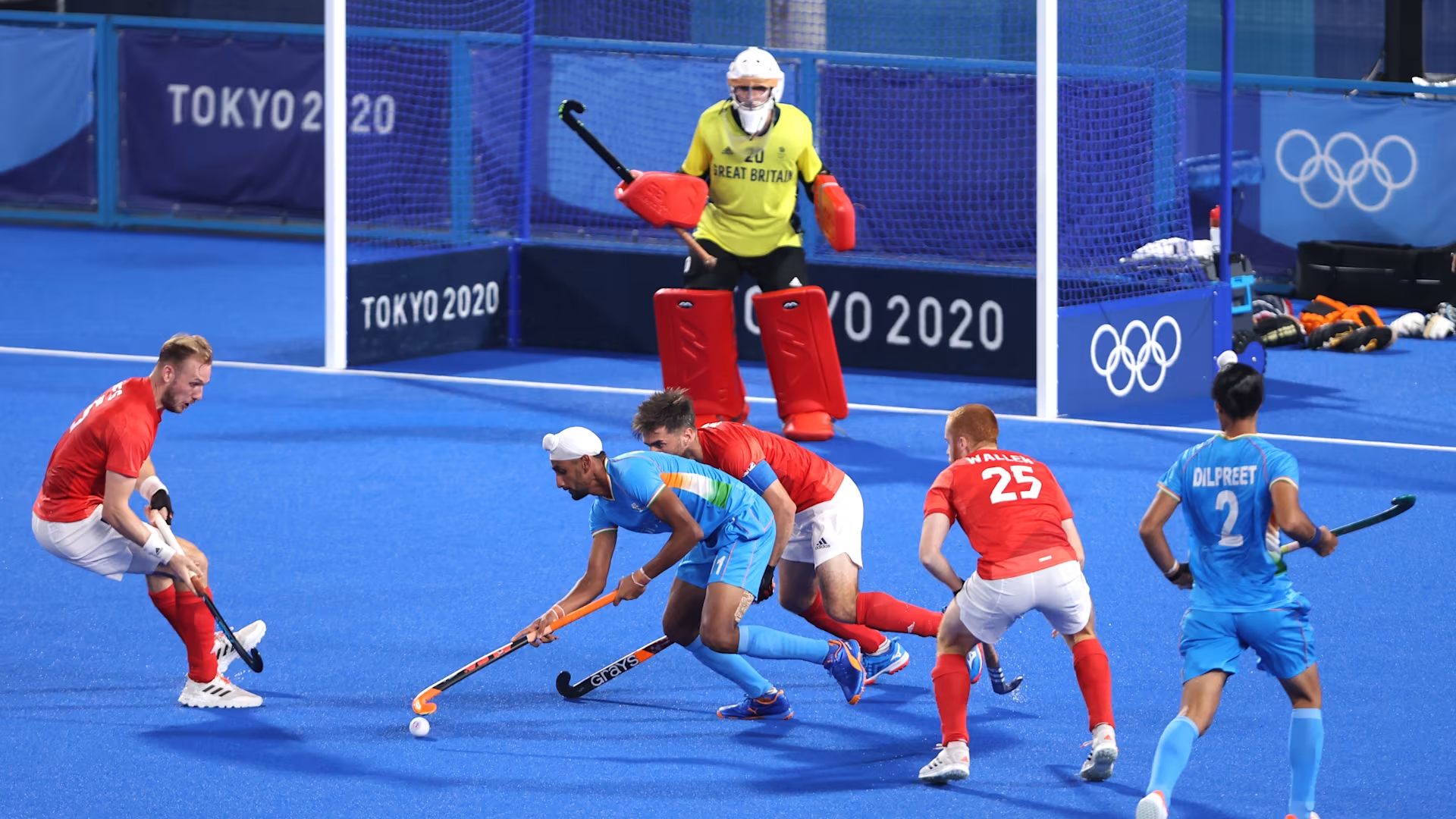
Hockey is one of the fastest and most exciting sports in the world, played at school, national, and international levels. Understanding hockey rules is essential for players, students, coaches, and fans who want to enjoy the game properly. Hockey rules define how the game is played, how goals are scored, how fouls are punished, and how matches are won. Whether it is field hockey or ice hockey, the basic purpose of the rules is to ensure fair play, safety, and consistency. This detailed Hockey Rules guide explains the laws of hockey in simple language while naturally using important hockey keywords, making it ideal for beginners and educational blogs.
What Is Hockey
Hockey is a team sport played between two teams, usually consisting of eleven players each in field hockey. The objective is to score goals by hitting the ball into the opponent’s goal using a hockey stick. Hockey rules regulate player movement, stick usage, ball control, and scoring. The game requires speed, skill, teamwork, and discipline.
Importance of Hockey Rules
Hockey rules are important because they maintain fairness and safety during matches. Without clear rules, the game would become dangerous and disorganized. Rules help umpires make accurate decisions and protect players from injury. Following hockey rules also promotes sportsmanship and respect among teams.
Governing Bodies of Hockey
The International Hockey Federation, known as FIH, governs international field hockey. It creates and updates official hockey rules and regulations. National hockey federations follow these guidelines for domestic competitions. Knowing about governing bodies helps players and fans stay informed about rule changes.
Hockey Field and Ground Rules
A standard hockey field is rectangular and made of grass or artificial turf. The field has marked lines, including the center line, shooting circle, and goal areas. Hockey rules define field dimensions to ensure uniform playing conditions worldwide. The goalposts and nets must meet specific standards.
Hockey Equipment Rules
Hockey equipment includes a stick, ball, shin guards, mouth guard, and appropriate footwear. The hockey stick must have a flat side and a curved side. Protective gear is mandatory for safety. Goalkeepers wear additional protective equipment as required by hockey rules.
Team Composition and Player Roles
Each field hockey team has eleven players, including one goalkeeper. Players have different roles such as defenders, midfielders, and forwards. Hockey rules allow substitutions during the match under specific conditions. Understanding player roles helps improve team strategy.
Match Duration and Time Rules
A standard field hockey match consists of four quarters, usually fifteen minutes each. There are short breaks between quarters. Hockey rules ensure equal playing time for both teams. Time can be stopped for injuries or disciplinary actions.
Start and Restart Rules
The match begins with a center pass from the middle of the field. Restarts also occur after goals, fouls, or stoppages. Hockey rules specify how and where restarts should be taken to maintain fairness.
Scoring Rules in Hockey
A goal is scored when the ball completely crosses the goal line inside the goalposts after being touched by an attacker within the shooting circle. Goals scored from outside the circle are not valid. Hockey rules strictly enforce scoring conditions.
Ball Control and Stick Rules
Players may only use the flat side of the hockey stick to hit the ball. Using the rounded side is a foul. Hockey rules also prohibit players from using their feet or body intentionally to control the ball, except for the goalkeeper.
Passing and Dribbling Rules
Passing and dribbling are essential skills in hockey. Players must control the ball safely and avoid dangerous play. Hockey rules prevent lifting the ball dangerously or causing injury to opponents.
Foot Foul Rules
A foot foul occurs when the ball touches a player’s foot or leg. This is one of the most common hockey fouls. Hockey rules award a free hit to the opposing team for foot fouls.
Obstruction Rules
Obstruction happens when a player blocks an opponent from reaching the ball without attempting to play it. Hockey rules prohibit obstruction to ensure free movement and fair competition.
Dangerous Play Rules
Dangerous play includes actions that could injure players, such as raising the stick too high or lifting the ball carelessly. Hockey rules prioritize player safety and penalize dangerous behavior.
Free Hit Rules
Free hits are awarded for minor fouls. The ball must be stationary before taking a free hit. Hockey rules require opposing players to maintain a specific distance until the hit is taken.
Penalty Corner Rules
Penalty corners are awarded for serious fouls by defenders inside the shooting circle. The attacking team has a chance to score under controlled conditions. Hockey rules define player positions and procedures during penalty corners.
Penalty Stroke Rules
A penalty stroke is awarded when a clear goal-scoring opportunity is unfairly prevented. The striker takes a shot against the goalkeeper from a fixed spot. Hockey rules strictly regulate penalty strokes to ensure fairness.
Goalkeeper Rules
The goalkeeper has special privileges, including using hands, feet, and body to stop the ball inside the shooting circle. Hockey rules restrict goalkeepers from using these privileges outside the circle.
Substitution Rules in Hockey
Substitutions are allowed during stoppages or play, depending on competition rules. Players entering and leaving the field must follow proper procedures. Hockey rules ensure smooth substitutions without disrupting the game.
Advantage Rule in Hockey
The advantage rule allows play to continue if stopping it would disadvantage the team that was fouled. Hockey rules encourage continuous play and fairness through this rule.
Umpires and Officials
Umpires enforce hockey rules during the match. They make decisions on fouls, goals, and penalties. Their authority must be respected at all times. Additional officials may assist in high-level matches.
Signals and Whistle Rules
Umpires use hand signals and whistles to communicate decisions. Understanding these signals helps players and spectators follow the game better. Hockey rules standardize umpire signals worldwide.
Disciplinary Rules and Cards
Hockey uses colored cards to discipline players. A green card is a warning, a yellow card results in temporary suspension, and a red card leads to permanent removal. Hockey rules maintain discipline through this system.
Offside Rules in Hockey
Modern field hockey has removed traditional offside rules to encourage attacking play. This change has made the game faster and more exciting. Hockey rules adapt over time to improve gameplay.
Safety Rules in Hockey
Safety is a major focus of hockey rules. Protective gear, safe tackling, and controlled stick use reduce injuries. Matches may be stopped if conditions become unsafe.
Hockey Rules for Beginners and Students
Beginners should focus on basic hockey rules such as stick control, foot fouls, scoring, and safety. School-level hockey often uses simplified rules to help students learn and enjoy the game.
Common Hockey Rule Violations
Common violations include foot fouls, obstruction, dangerous play, and incorrect penalty corner procedures. Awareness of hockey rules helps players avoid penalties and improve performance.
Differences Between Field Hockey and Ice Hockey Rules
Field hockey and ice hockey have different rules, equipment, and playing surfaces. Field hockey uses a ball and curved stick, while ice hockey uses a puck and skates. Understanding these differences prevents confusion.
Role of Fair Play in Hockey
Fair play is central to hockey. Respecting opponents, umpires, and rules reflects the true spirit of the game. Hockey rules support ethical behavior and teamwork.
Evolution of Hockey Rules
Hockey rules have evolved to make the game safer and more exciting. Changes in offside rules, match duration, and technology have modernized the sport. Continuous updates ensure hockey remains competitive and enjoyable.
Future of Hockey Rules
The future of hockey rules focuses on player safety, technology, and fairness. Video referrals and digital tools are becoming more common. These advancements aim to improve decision-making and transparency.
Conclusion
Hockey rules form the foundation of the sport and ensure fair, safe, and enjoyable competition. This Hockey Rules guide covers field layout, scoring rules, fouls, penalties, and player responsibilities in detail. By understanding and following hockey rules, players and fans can appreciate the game more deeply and uphold the spirit of hockey at every level.