
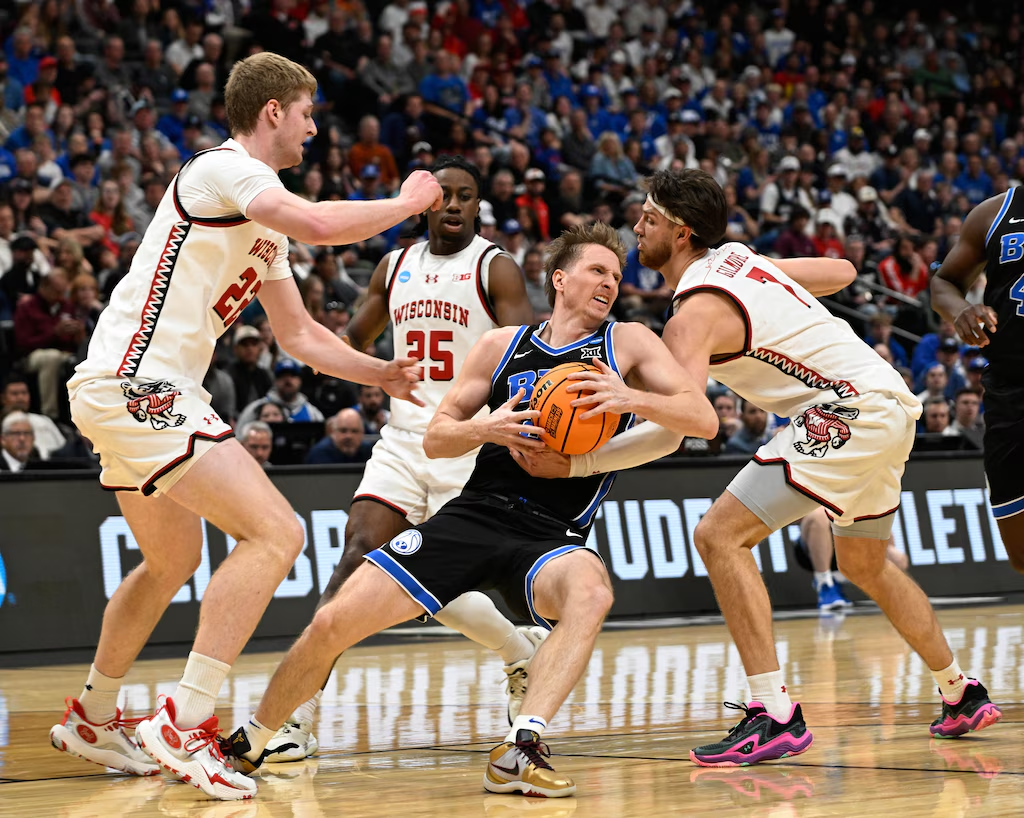
Basketball is one of the most popular sports in the world, played in schools, colleges, streets, parks, and professional arenas. While the game looks simple on the surface, it is governed by a detailed set of rules that ensure fair play, safety, and smooth competition. Understanding basic basketball rules is essential for every player, whether you are a beginner learning the game for the first time or an experienced player looking to improve your overall knowledge. Knowing the rules helps players avoid unnecessary fouls, make smarter decisions on the court, and enjoy the game with confidence.
Basketball rules are generally based on standards set by governing bodies such as FIBA, NBA, and NCAA. While there are minor differences between leagues, the core basketball rules remain the same worldwide. This detailed guide explains the basic basketball rules every player should know, covering court layout, scoring system, game timing, player positions, violations, fouls, substitutions, and official responsibilities. This blog is written in simple language with important basketball keywords to make it easy to understand and helpful for learning and indexing purposes.
Introduction to Basketball and Its Objective
The main objective of basketball is simple: score more points than the opposing team by shooting the ball through the opponent’s hoop. Each team tries to prevent the other from scoring by playing defense, blocking shots, stealing the ball, and forcing mistakes. A standard basketball game is played between two teams, each consisting of five players on the court at a time.
Basketball is a fast-paced sport that requires teamwork, skill, discipline, and rule awareness. Players must follow the official basketball rules to ensure fair competition. Any violation of these rules can result in turnovers, fouls, or penalties that may affect the outcome of the game.
Basketball Court Dimensions and Equipment Rules
A standard basketball court is rectangular and divided into two equal halves. The court includes key markings such as the center circle, three-point line, free throw line, key area, baseline, and sidelines. According to international basketball rules, the hoop is placed at a height of 10 feet from the ground, and the basketball rim has a diameter of 18 inches.
The basketball itself must meet official size and weight standards. Men’s basketballs, women’s basketballs, and youth basketballs differ slightly in size and weight. Players must use approved equipment to ensure consistency and fairness during games. Wearing proper basketball shoes, jerseys, and protective gear is also part of basic basketball rules, as it helps prevent injuries and improves performance.
Number of Players and Team Structure
Each basketball team has five players on the court at any given time. These players usually take on specific roles or positions, including point guard, shooting guard, small forward, power forward, and center. While modern basketball allows flexibility in positions, understanding these roles helps players perform better within the team system.
Teams also have substitute players on the bench. Substitutions can be made during stoppages in play, and there is no limit on the number of substitutions in most basketball leagues. This rule allows players to rest and teams to adjust strategies throughout the game.
Duration of a Basketball Game
The length of a basketball game depends on the level of play and the governing organization. In international basketball under FIBA rules, a game consists of four quarters of 10 minutes each. In the NBA, each quarter is 12 minutes long. College and school-level games may follow slightly different timing formats.
Between quarters, there are short breaks, and a longer halftime break occurs after the second quarter. If the game is tied at the end of regulation time, overtime periods are played to determine the winner. Each overtime period has a fixed duration, and teams continue playing until one team leads at the end of an overtime session.
Scoring Rules in Basketball
Understanding basketball scoring rules is one of the most important aspects of the game. A field goal scored from inside the three-point line is worth two points. A successful shot taken from beyond the three-point line is worth three points. Free throws, which are awarded after certain fouls, are worth one point each.
Players must release the ball before the shot clock expires for the basket to count. If the ball is still in the player’s hand when time runs out, the shot is not counted. Accurate scoring, proper shot selection, and awareness of time are key elements of successful basketball play.
Jump Ball and Possession Rules
Most basketball games begin with a jump ball at the center circle. The referee tosses the ball into the air, and one player from each team attempts to tap the ball to a teammate. After the opening jump ball, possession is usually determined by an alternating possession rule in many leagues.
Possession rules are important because they decide which team controls the ball after certain situations, such as held balls or simultaneous possession. Teams must be aware of possession indicators to plan their offensive and defensive strategies.
Dribbling Rules Every Player Must Know
Dribbling is the act of bouncing the basketball on the floor while moving. According to basic basketball rules, a player may only take one step before starting to dribble. Once a player stops dribbling, they cannot start dribbling again. This violation is known as double dribble.
Carrying the ball, also called palming, is another dribbling violation. It occurs when a player places their hand under the ball and continues dribbling. These rules exist to ensure fair ball control and prevent players from gaining an unfair advantage.
Traveling Violation Explained
Traveling is one of the most common basketball violations. It occurs when a player takes too many steps without dribbling the ball. While the exact interpretation of steps may vary slightly between leagues, the basic rule remains the same: players must dribble while moving.
Understanding traveling rules helps players move efficiently on the court and avoid turnovers. Good footwork and ball-handling skills are essential to prevent traveling violations during games.
Passing and Ball Control Rules
Passing is a fundamental basketball skill that allows teams to move the ball quickly and create scoring opportunities. Players may pass the ball in any direction using chest passes, bounce passes, or overhead passes. However, intentional kicking of the ball or striking it with the fist is not allowed and results in a violation.
Players must also avoid stepping out of bounds while holding the ball. Stepping on or beyond the boundary lines results in a turnover, and possession is awarded to the opposing team.
Shot Clock Rules in Basketball
The shot clock is a crucial rule designed to keep the game fast-paced. Under international basketball rules, teams have 24 seconds to attempt a shot that hits the rim. If a team fails to do so, a shot clock violation occurs, and the ball is given to the opposing team.
After an offensive rebound, the shot clock may reset to a shorter duration, depending on the league. Understanding shot clock rules helps players manage time effectively and make smart offensive decisions.
Defensive Rules and Legal Guarding Position
Defense is a vital part of basketball, and players must follow specific rules when guarding opponents. A legal guarding position is established when a defender faces the opponent with both feet on the floor. Once this position is set, the defender is allowed to move laterally or backward to stay in front of the offensive player.
Blocking fouls occur when a defender fails to establish a legal guarding position, while charging fouls occur when an offensive player runs into a stationary defender. Knowing the difference between these fouls helps players play smarter defense.
Fouls in Basketball Explained
A foul is an illegal physical contact or unsportsmanlike behavior. Personal fouls occur when players make illegal contact, such as pushing, holding, or hitting an opponent. Team fouls accumulate during each quarter, and after a certain number of fouls, the opposing team is awarded free throws.
Unsportsmanlike fouls and technical fouls are given for inappropriate behavior, arguing with referees, or intentional rough play. These fouls carry additional penalties and can significantly impact the game.
Free Throw Rules and Procedures
Free throws are awarded after certain fouls and provide players with an opportunity to score without defensive pressure. Players must stand behind the free throw line and shoot the ball within a specified time limit. Other players must remain outside the key area until the ball is released.
Understanding free throw rules helps players maximize scoring chances and avoid violations that can cancel scoring opportunities.
Substitution Rules in Basketball
Substitutions allow teams to replace players during stoppages in play. There is no limit to the number of substitutions, making basketball a dynamic sport where coaches can adjust lineups frequently.
Substituted players must report to the scorer’s table and wait for the referee’s signal before entering the game. This rule ensures organized substitutions and prevents confusion on the court.
Timeouts and Their Importance
Timeouts are used by coaches to stop the game, discuss strategies, and give players rest. Each team is allowed a specific number of timeouts per game, depending on league rules.
Players must return to the court promptly after a timeout ends. Proper use of timeouts can change the momentum of a game and improve team performance.
Violations Related to Time and Space
Basketball includes several time-related violations, such as the three-second rule, five-second rule, and eight-second rule. The three-second rule prevents offensive players from staying in the key area for too long. The five-second rule limits how long a player can hold the ball without passing or dribbling when closely guarded. The eight-second rule requires teams to advance the ball past half-court within a specific time frame.
These rules promote movement, spacing, and fast-paced gameplay. Players who understand these violations can avoid turnovers and maintain offensive flow.
Role of Referees and Officials
Referees and officials enforce basketball rules and ensure fair play. They make decisions on fouls, violations, scoring, and game management. Players must respect referees and accept their decisions, even if they disagree.
Arguing excessively with officials can result in technical fouls, which harm the team. Good sportsmanship is a key part of basketball culture and rule compliance.
Basic Basketball Etiquette and Sportsmanship
Beyond official rules, basketball also emphasizes respect, teamwork, and fair behavior. Players are expected to shake hands, help fallen opponents, and avoid unnecessary aggression. Good sportsmanship creates a positive playing environment and reflects the true spirit of the game.
Following etiquette rules helps players build strong relationships with teammates, coaches, and opponents.
Common Beginner Mistakes and How to Avoid Them
Many beginners struggle with traveling, double dribbling, and unnecessary fouls. These mistakes often occur due to lack of rule awareness or nervousness during games. Regular practice, watching games, and learning basketball rules can help players reduce errors and gain confidence.
Understanding basic basketball rules allows players to focus more on skill development and teamwork rather than worrying about penalties.
Importance of Learning Basketball Rules
Learning basketball rules is just as important as learning how to shoot, pass, or dribble. Rules shape the structure of the game and ensure fairness at all levels. Players who understand the rules have a competitive advantage because they make better decisions under pressure.
Whether playing street basketball, school competitions, or organized leagues, rule knowledge helps players adapt quickly and play smarter basketball.
Conclusion
Basic basketball rules every player should know form the foundation of the sport. From court dimensions and scoring rules to fouls, violations, and substitutions, these rules guide every aspect of the game. Understanding basketball rules helps players avoid mistakes, improve performance, and enjoy the game to its fullest.
Basketball is more than just scoring points; it is about discipline, teamwork, and respect for the rules. By learning and following these basic basketball rules, players at any level can develop confidence, improve skills, and become better teammates and competitors. As you continue playing and watching basketball, your understanding of these rules will grow, making the game even more exciting and rewarding.