
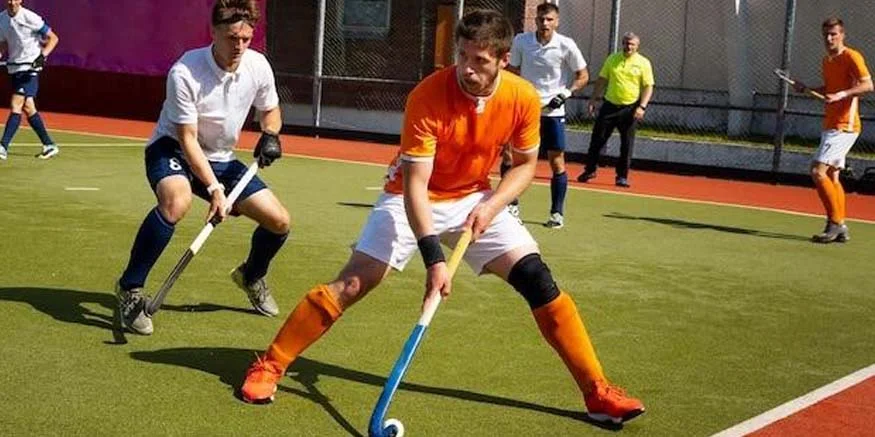
Hockey is a fast-paced, highly skilled sport that demands speed, discipline, teamwork, and a strong understanding of rules. Over the years, hockey rules and regulations have evolved to make the game safer, fairer, and more exciting for players and spectators. Whether you are a beginner, an amateur club player, or someone who closely follows international hockey, knowing the latest hockey rules is essential. These rules not only guide how the game is played but also influence tactics, fitness, and overall performance. This detailed guide explains the latest hockey rules and regulations every player should know, using simple language while covering all important aspects of the modern game.
International hockey rules are governed by the International Hockey Federation, commonly known as FIH. These rules apply to international tournaments, national leagues, and are often adapted slightly for local competitions. Understanding FIH hockey rules helps players avoid penalties, improve decision-making, and play with confidence on the field.
Overview of Modern Field Hockey
Field hockey is played between two teams of eleven players each, including a goalkeeper. The objective is to score goals by hitting or pushing the ball into the opponent’s goal using a hockey stick. The game is played on a rectangular field, usually made of artificial turf, which allows faster and more consistent play compared to natural grass.
Modern hockey emphasizes speed, skill, and continuous play. Rule changes over the past decade have reduced stoppages and encouraged attacking play, making it essential for players to stay updated with the latest regulations.
Match Duration and Game Structure
According to the latest hockey rules, a standard match consists of four quarters, each lasting 15 minutes. There is a short break of two minutes between the first and second quarters and between the third and fourth quarters. A longer halftime break of 10 minutes occurs between the second and third quarters.
This quarter-based format was introduced to increase intensity and allow teams to reset strategies more frequently. Players must be aware that play restarts after each break with a center pass, and teams alternate the starting possession.
Team Composition and Substitution Rules
Each team consists of a maximum of 11 players on the field at one time, including one goalkeeper or a player with goalkeeping privileges. Teams are allowed unlimited substitutions throughout the match, except during penalty corner situations where substitutions are restricted.
Substitutions in hockey are rolling substitutions, meaning players can leave and enter the field at any time without stopping play, as long as they do so from the designated substitution area. This rule encourages high-intensity play and allows teams to maintain fresh legs on the field.
Player Equipment and Safety Regulations
Player safety is a major focus of the latest hockey regulations. All players must use approved hockey sticks that meet size and shape standards defined by FIH. The stick must be flat on one side and cannot have sharp edges.
Shin guards and mouthguards are strongly recommended and are often mandatory in competitive matches. Goalkeepers must wear full protective equipment, including helmet, leg guards, kickers, chest protector, gloves, and padded shorts.
Jewelry, watches, and any dangerous accessories are strictly prohibited. Umpires inspect player equipment before the match and can stop play if unsafe gear is noticed during the game.
The Hockey Field and Markings
The hockey field is 91.4 meters long and 55 meters wide. Clear field markings define different areas, including the center line, 23-meter lines, shooting circles, and penalty spots.
The shooting circle, also known as the D, is especially important because goals can only be scored if the ball is played by an attacker from inside this circle. Understanding field markings helps players position themselves correctly and avoid unnecessary fouls.
Start and Restart of Play
The match begins with a center pass. The ball must be pushed, not hit, from the center of the field. At the start of each quarter and after a goal, play resumes with a center pass.
At the time of the center pass, all players must be in their own half of the field, and opponents must be at least five meters away from the ball. These rules ensure a fair restart and prevent early pressure.
Scoring Goals Under Latest Rules
A goal is scored when the ball completely crosses the goal line between the goalposts and under the crossbar, provided it was last touched by an attacker inside the shooting circle.
Recent rule clarifications allow deflections and rebounds off defenders, including the goalkeeper, as long as the initial touch by the attacker occurred inside the circle. Players must be careful not to play the ball dangerously while attempting deflections.
Ball Control and Use of the Stick
Players are allowed to use only the flat side of the stick to play the ball. Using the rounded side, known as the back stick, results in a foul.
Ball control using the body is generally not allowed. The ball must not be intentionally played with the feet, legs, or any part of the body. However, unintentional contact, where no advantage is gained, may be allowed at the umpire’s discretion.
Dangerous Play and High Ball Rules
Dangerous play is a key focus of modern hockey officiating. A ball is considered dangerous if it causes legitimate evasive action by an opponent. Raising the ball in a crowded area or hitting the ball at head height near other players often results in a foul.
The latest hockey rules allow aerial passes, but players must ensure the ball does not travel dangerously and that opponents have the opportunity to safely receive or intercept it. Umpires judge danger based on proximity, speed, and player reactions.
Fouls and Types of Free Hits
When a foul occurs outside the shooting circle, the defending team is awarded a free hit. The ball must be stationary when taken, and opponents must be at least five meters away.
For attacking free hits taken within the attacking 23-meter area, additional restrictions apply. The ball must travel at least five meters before entering the shooting circle, or be touched by another player before entry. This rule prevents unfair quick attacks close to the goal.
Penalty Corner Rules Explained
Penalty corners are one of the most important scoring opportunities in hockey. A penalty corner is awarded for specific fouls committed by defenders inside the shooting circle or for deliberate fouls within the defensive 23-meter area.
During a penalty corner, only five defenders, including the goalkeeper, are allowed behind the back line, while the remaining defenders must position themselves beyond the center line. Attackers must remain outside the circle until the ball is played.
The ball must be stopped outside the circle before a shot on goal is taken. If the first shot is a hit, it must not rise above the backboard height. These rules are strictly enforced to ensure safety.
Penalty Stroke Regulations
A penalty stroke is awarded when a defender commits a foul inside the shooting circle that prevents a probable goal. The stroke is taken from the penalty spot, seven meters from the goal line.
Only the goalkeeper may defend the penalty stroke, and they must remain on the goal line until the ball is played. The attacker has one attempt to score, and no rebounds are allowed.
Role of Umpires and Their Decisions
Umpires are responsible for enforcing hockey rules and ensuring fair play. There are usually two on-field umpires who share control of the match. Their decisions are final and must be respected by all players.
Umpires focus on player safety, advantage rules, and the spirit of the game. They can issue warnings, green cards, yellow cards, or red cards for misconduct or repeated fouls.
Card System and Player Discipline
The card system in hockey is used to manage player behavior. A green card serves as a warning. A yellow card results in temporary suspension, typically ranging from two to ten minutes depending on the severity of the offense. A red card leads to permanent suspension from the match.
Players receiving a red card may face additional disciplinary action beyond the match, depending on tournament regulations.
Advantage Rule in Modern Hockey
The advantage rule allows umpires to let play continue if stopping the game for a foul would disadvantage the team that was fouled. This rule supports continuous play and attacking opportunities.
Players should continue playing until they hear a whistle, as assuming a foul will be given can lead to missed chances or defensive errors.
Goalkeeper Rules and Privileges
Goalkeepers have special privileges within the shooting circle. They are allowed to use any part of their body, equipment, or stick to stop the ball. Outside the circle, goalkeepers are treated as normal field players and may use only their stick.
A team may also choose to play with a field player who has goalkeeping privileges instead of a fully equipped goalkeeper, adding tactical flexibility.
Video Referrals and Technology
In high-level competitions, teams are allowed a limited number of video referrals to challenge umpire decisions related to goals, penalty corners, penalty strokes, and disciplinary actions.
Video technology has improved decision-making accuracy, but the on-field umpire’s authority remains central to the game.
Common Keywords Related to Latest Hockey Rules
Latest hockey rules and regulations, FIH hockey rules, field hockey rules explained, penalty corner rules hockey, hockey foul rules, hockey card system, dangerous play in hockey, hockey scoring rules, hockey umpire decisions, modern field hockey regulations, hockey advantage rule, goalkeeper rules in hockey, international hockey rules.
Conclusion
Understanding the latest hockey rules and regulations is essential for every player who wants to perform confidently and competitively. Modern hockey is faster, more tactical, and more disciplined than ever before, and rule knowledge plays a major role in success on the field.
By learning these rules, players can avoid unnecessary penalties, make smarter decisions, and contribute positively to their team’s performance. For fans, rule awareness adds depth and enjoyment to every match. Hockey continues to evolve, but respect for the rules, umpires, and the spirit of the game remains at the heart of this exciting sport.